

National Consultation Shapes India’s First Employability Framework for Youth with Learning Disabilities
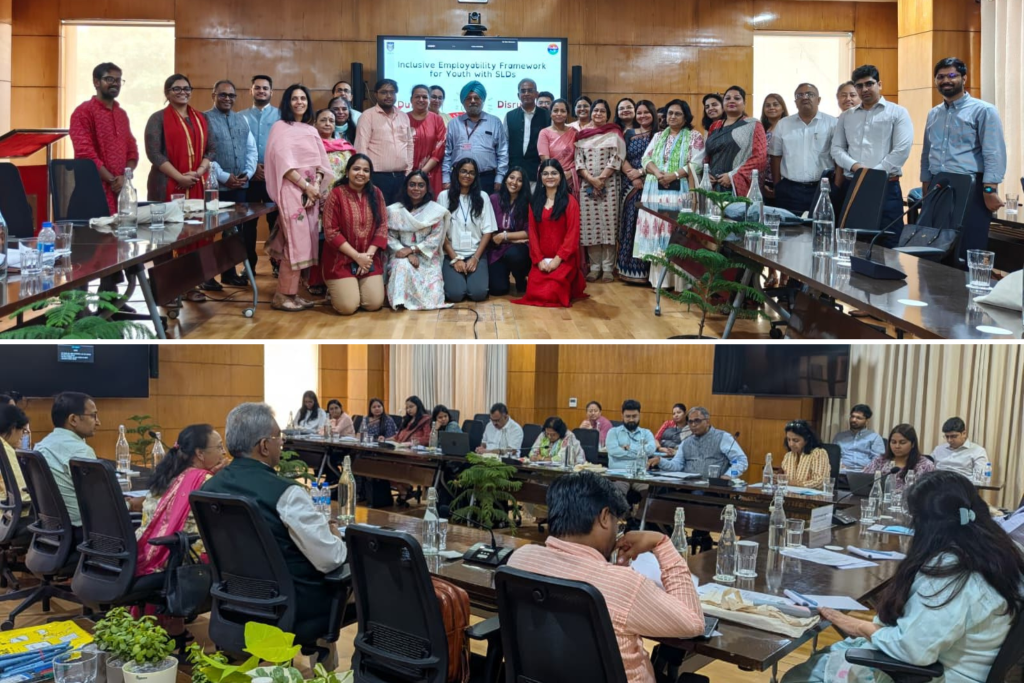
New Delhi — A major national consultation has advanced India’s first-ever National Inclusive Employability Framework (IEF), establishing a definitive roadmap to transition an estimated 75 million youth with Specific Learning Disabilities (SLDs) into high-growth sectors. Co-convened by the Commonwealth Educational Media Centre for Asia (COL-CEMCA) and the ChangeInkk Foundation at the Civil Services Officers’ Institute, the event successfully translated practitioner realities into actionable policy inputs. The primary outcome of the convention is a refined, comprehensive blueprint that connects early identification, inclusive education, flexible assessments, skilling, and internships into a seamless employment pathway. These finalized inputs will now be presented to government stakeholders for policy influence and large-scale national adoption.
The framework directly addresses a massive talent pool, as India is home to millions of young people with SLDs recognized under the Rights of Persons with Disabilities Act, 2016. Research highlights that the cognitive strengths associated with SLDs, such as pattern recognition, creative problem-solving, and big-picture systems thinking, collectively termed “dyslexic thinking,” map precisely onto the skills driving India’s future economy. To harness this potential, the consultation emphasized moving beyond basic awareness toward systemic reforms. Delegates explicitly called for the creation of robust data systems to inform policy and monitor long-term career outcomes for these learners, ensuring evidence-based planning and stronger partnerships between educational institutions, government, and industry.
This initiative aligns closely with major national mandates, including Viksit Bharat 2047, the National Education Policy (NEP) 2020, and Skill India. The framework identifies eight priority growth sectors where the work itself inherently rewards the unique cognitive strengths of individuals with SLDs. These areas include cybersecurity, urban planning and architecture, media and entertainment, healthcare innovation, and electric vehicles, with artificial intelligence, entrepreneurship, and research and development acting as cross-cutting enablers. Experts at the event underscored the importance of targeting skilling specifically toward these emerging domains to promote inclusive recruitment and workplace practices.
The consultation brought together over 30 high-level delegates from government, higher education, industry, and civil society, including senior representatives from NITI Aayog, the Capacity Building Commission, IGNOU, NIEPA, FICCI, CII, nasscom, Deloitte, and Capgemini. Dr. B. Shadrach, Director of COL-CEMCA, opened the proceedings by contextualizing the framework within inclusive employability lessons learned across Commonwealth nations. Grounding the discussions in reality, an experience-sharing panel featured students, an entrepreneur, and a serving civil servant with lived experiences of SLDs, followed by a data presentation from Ms. Noopur Jhunjhunwala, Founder and Trustee of the ChangeInkk Foundation.
During his keynote address, Prof. (Dr.) Nirmaljeet Singh Kalsi, IAS (Retd.) and former Chairman of NCVET, championed the cause by calling for diverse pathways for minds that think differently. The deliberations concluded with a strong reflection of COL’s commitment to gender equality, as women constituted approximately two-thirds of the participants working to shape this landmark national framework