

Critical Lack of Empirical Data in Digital Pedagogy Sparks New National Research Initiative in India
An urgent need for robust, evidence-based research to guide India’s massive digital higher education transition has triggered a landmark joint initiative. While millions of students now rely on digital platforms, the academic community faces a stark gap in high-quality, practice-oriented research evaluating the actual efficacy, inclusivity, and design of these digital learning ecosystems.
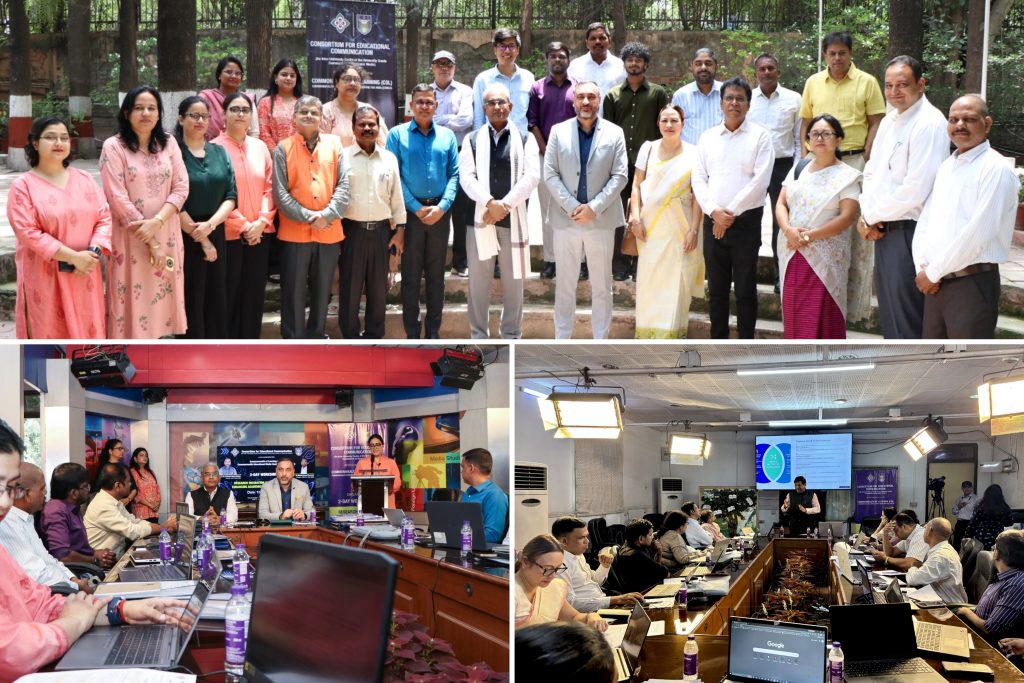
Addressing this critical deficit, the Commonwealth Educational Media Centre for Asia (COL-CEMCA) and the Consortium for Educational Communication (CEC), an Inter-University Centre of the University Grants Commission (UGC) have collaborated in a six-month research incubation programme. The initiative began with an intensive two-day National Pre-Research Workshop on “Research Incubation and Advanced Training: Enhancing Academic Research in the Digital Era” on 15–16 July 2026 at the CEC campus, New Delhi.
Shaping the Future of India’s Digital Classrooms
The initiative specifically targets the lack of empirical studies in India’s rapidly expanding digital education sector. Selected faculty members and researchers from CEC’s Educational Multimedia Research Centres (EMRCs) across India will receive structured, long-term mentoring to build high-quality research capacity.
The primary objective is to generate actionable data and insights in critical, under-researched areas:
- Digital Pedagogy & Learning Design: Understanding how students actually absorb information online compared to traditional environments.
- Learner Engagement & Inclusivity: Identifying barriers to digital access and creating strategies to keep remote learners engaged.
- Broadcasting & Platforms: Evaluating the real-world impact of national digital initiatives such as SWAYAM, SWAYAM Prabha, and the National Education Policy (NEP) 2020.
Building a Collaborative Research Ecosystem
To bridge these gaps, the initiative seeks to move away from isolated academic efforts and instead foster a deeply connected, institutional network of researchers.
“True educational transformation cannot happen in silos. By incubating this research talent across the EMRCs, we are not just training individuals; we are building a sustainable, collaborative research ecosystem. This network will continuously generate the insights needed to refine learning design and elevate technology-enabled education across Indian universities.” — Dr B. Shadrach, Director, COL-CEMCA
A Narrative of the Two-Day Intensive Training
Over the course of the two-day workshop, participants were immersed in a rigorous curriculum designed to elevate their projects from initial concepts to sophisticated research designs. Rather than relying on passive lectures, the workshop functioned as an active sandbox.
Expert mentors led the cohort through the foundational steps of structuring robust qualitative and quantitative methodologies, showing researchers how to align their academic questions with strict empirical standards. This was followed by hands-on sessions exploring modern research tools, with a significant emphasis placed on the ethical and responsible integration of artificial intelligence in data analysis and literature reviews.
The training culminated in focused segments on academic writing and research translation. Here, participants learned not just how to publish in high-impact journals, but how to convert complex statistical data into accessible, clear recommendations that policymakers can easily implement.
Throughout the final afternoon, the classroom transformed into a collaborative forum. Researchers stood before their peers and mentors to present their raw proposals, receiving constructive, real-time feedback that reshaped and sharpened their blueprints for the six-month incubation journey ahead.
In closing, Prof. (Dr.) Parikshat Singh Manhas, Director, CEC remarked, “We must generate evidence-based research to improve the quality, accessibility, and overall impact of digital higher education in India. We cannot fly blind in the digital era.”