

COL-CEMCA Convenes National Stakeholder Consultation on Recognition of Prior Learning in ODL and Dual-Mode Institutions
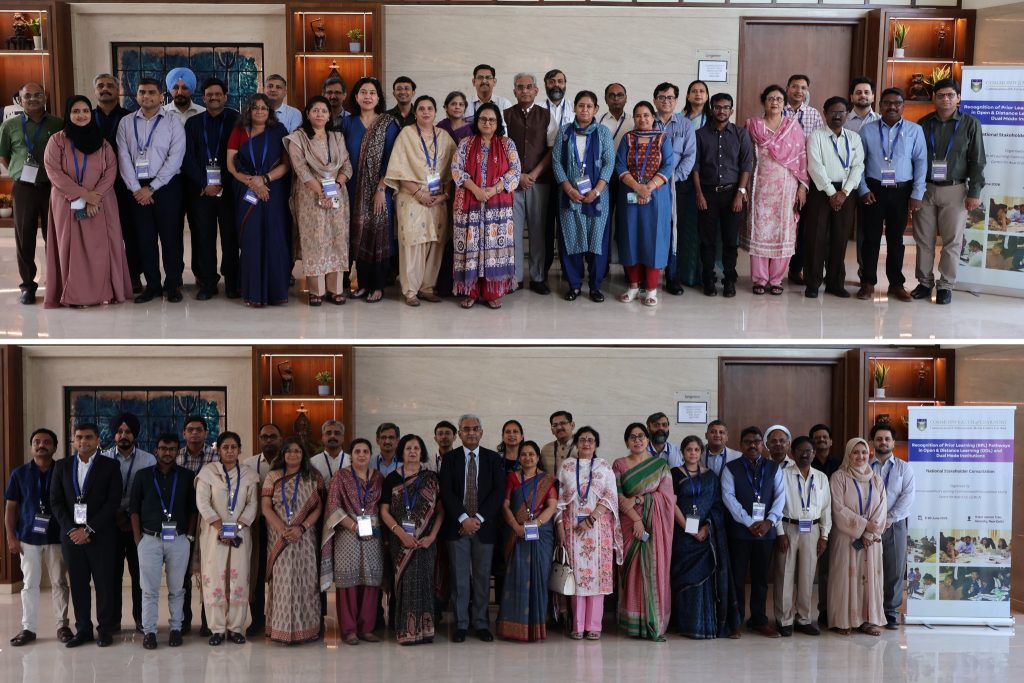
New Delhi, India | 10 June 2026
The Commonwealth Educational Media Centre for Asia (COL-CEMCA) convened a two-and-a-half-day National Stakeholder Consultation on Recognition of Prior Learning (RPL) Pathways in Open and Distance Learning (ODL) and Dual-Mode Institutions from 8-10 June, 2026 at Hotel Lemon Tree, Aerocity, New Delhi. The consultation brought together faculty coordinators, academic administrators, and institutional leaders from 22 open and dual-mode universities across India to address one of the most consequential unresolved questions in higher education: how to formally recognise learning that takes place outside the classroom.
Delivering the welcome address, Dr. B. Shadrach, Director of COL-CEMCA, underlined that India’s policy architecture—including the National Education Policy (NEP 2020), the National Skills Qualification Framework, the National Credit Framework, and the Academic Bank of Credits—had created the conditions for RPL to work at scale across the partner institutions that COL-CEMCA has supported over the past two years. What remained, he noted, was the challenge of converting policy intent into credible institutional practice.
The keynote address was delivered by Dr. Neena Pahuja, former Executive Member of the National Council for Vocational Education and Training (NCVET), who spoke on building unified RPL frameworks in dual-mode universities. Dr. Pahuja situated the urgency of RPL within a rapidly shifting labour landscape, noting that nearly 39 per cent of core job skills are projected to change by 2030, making the formal recognition of experiential and informal learning not a peripheral concern but a structural necessity for higher education institutions.
The consultation was structured around the specific demands that RPL places on ODL institutions, including developing fair assessment methods for learning acquired through work and lived experience, establishing quality assurance mechanisms, addressing questions of evidence validation and learner identity, and creating digital workflows capable of handling diverse and large-scale applicant pools. Participants engaged in nine substantive sessions facilitated over the two days by Prof Jeetendra Pande, Consultant COL-CEMCA, generating institutional inputs towards RPL policy templates, assessment frameworks, credit guidelines, and quality assurance protocols.
The consultation also included a coordinated review of Faculty Development Programme priorities for 2026–27, with discussions focusing on emerging areas such as AI-enabled pedagogy and opportunities in the Animation, Visual Effects, Gaming and Comics (AVGC) sector.
Addressing the valedictory session, Prof. Uma Kanjilal, Vice Chancellor of Indira Gandhi National Open University, highlighted the importance of implementing structured RPL frameworks in higher education, emphasizing the need to recognize experiential learning, strengthen credit-transfer mechanisms, and build institutional capacity. Prof. Kanjilal stressed that “every skill has a story and every experience has value,” underscoring the importance of creating systems capable of capturing and certifying learning acquired outside formal classrooms.
The consultation concluded with a shared commitment among participating institutions to advance the implementation of Recognition of Prior Learning within their respective contexts. The deliberations and recommendations emerging from the workshop will contribute to the development of first-ever Recognition of Prior Learning (RPL) Implementation Framework specially tailored for Open and Distance Learning (ODL) and Dual Mode Higher Education Institutions (HEIs).