

Joining Global Celebrations on the CAPLA International Day of Recognition: COL-CEMCA’s Commitment to Transforming Dual Mode Higher Education through Rigorous RPL Frameworks
Dr. B. Shadrach Director, Commonwealth of Learning – Commonwealth Educational Media Centre for Asia (COL-CEMCA)
New Delhi, India — On this momentous occasion of the global International Day of Recognition, announced by the Canadian Association for Prior Learning Assessment (CAPLA), the Commonwealth Educational Media Centre for Asia (COL-CEMCA) proudly joins the international community in celebrating the power of formalizing non-formal and informal learning.
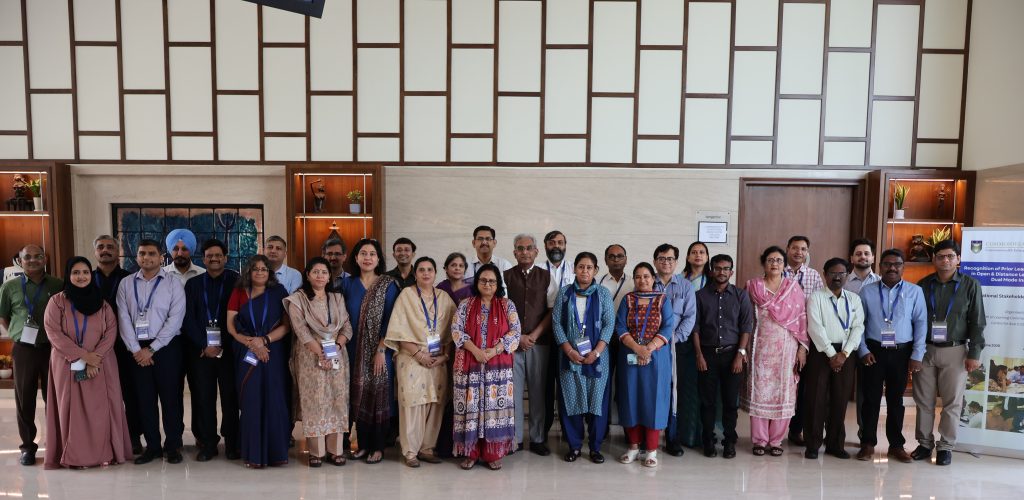
Coincidentally, June 9, 2026, marks both the inaugural day of CAPLA’s International Day of Recognition and the successful conclusion of COL-CEMCA’s pioneering two-day institutional workshop. This historic event marks the creation of the first-ever Recognition of Prior Learning (RPL) Implementation Framework specially tailored for Open and Distance Learning (ODL) and Dual Mode Higher Education Institutions (HEIs).
Anchored in the National Vision
Designed to transition our academic ecosystems from historical “gatekeepers of seat hours” to “rigorous evaluators of true competence,” this new framework is fully aligned with the pathbreaking directives of India’s National Education Policy (NEP) 2020, the National Credit Framework (NCrF), and the University Grants Commission (UGC) March 2025 Guidelines for the Recognition of Prior Learning.
With over 90% of India’s vast workforce operating in the informal sector, possessing immense, uncertified expertise but lacking formal credentials, this milestone is a demographic imperative. By translating real-world capability into a formal legal currency, we are removing redundant time penalties for mature learners and unlocking an alternative, fully compliant route to higher education.
Our Pledge: 25% RPL Readiness
To translate our celebrations into a measurable, systemic impact, COL-CEMCA’s partners are formally committing to a bold target: making 25% of all recognised dual mode institutions RPL-ready. We will actively assist these institutions in adopting the strict quality safeguards and operational mechanisms established during our milestone workshop, enabling them to confidently evaluate, validate, and creditise prior learning safely.
Key Pillars of the Faculty Roadmap for RPL Implementation
Based on the institutional readiness roadmap presented at the event, achieving “RPL Readiness” means equipping institutions with robust operational and technological infrastructure:
- Strict System Boundaries & Credit Caps: In complete compliance with Section 6.1 of the UGC Guidelines, the framework enforces a rigid guardrail where credits awarded via RPL will never exceed 30% of the total credit requirements of any approved academic program, e.g., a maximum of 36 credits for a 120-credit Bachelor’s degree, completely excluding highly regulated fields like Medicine, Nursing, and Law.
- Outcomes-Based Mapping: Credits will not be granted for experience alone. Faculty will use curriculum outcome mapping to align uncertified competence directly to defined Course Learning Outcomes (CLOs) using rigorous diagnostic assessments such as practical demonstrations, interviews, or targeted challenge examinations.
- The Three-Tier Filtration & Evidence Taxonomy: Candidates will be scaffolded using an Evidence Taxonomy, ranging from formal certificates to community/life practice testimonials. Every portfolio must pass a rigid three-tier filtration system, Preliminary Screening; External Validation; and Active Deep Assessment overseen by a recorded, multi-member panel to fully distribute accountability and eliminate subjectivity.
- Digitised eRPL Infrastructure: To scale across thousands of non-traditional, remote learners, workflows will be completely paperless. The workflow integrates seamlessly with the national Academic Bank of Credits (ABC), safely depositing approved credits directly into the learner’s digital account on a Pass/Fail or “Satisfactory” basis to eliminate any CGPA distortions.
- Radical Quality Assurance: To maintain the same academic weight as traditional degrees, institutions will preserve a 3-year auditable record trail and implement a mandatory Moderation Loop, where a random 10% sample of portfolios undergo independent blind external evaluation each semester.
A Shared Journey Forward
By embedding these rigorous academic benchmarks into professional career ladders, we are moving from a standard of where an individual studied to what they can confidently do, and how well they can prove it.
COL-CEMCA remains deeply committed to supporting educators and institutions across the Commonwealth. Through this newly developed framework, we stand ready to empower lifelong learners, champion equity, and responsibly open the gates of higher education to a highly skilled, deserving workforce.
The statement has been endorsed by the representatives of the following institutions:
- Banasthali Vidyapith, Rajasthan
- Biju Patnaik University of Technology, Odisha
- Dayalbagh Educational Institute, Agra
- Dr. B.R. Ambedkar Open University, Hyderabad
- Dr. Babasaheb Ambedkar Open University, Ahmedabad
- Dr. B.R. Ambedkar University Delhi
- GGSIP University, New Delhi
- Guru Nanak Dev University, Punjab
- Indira Gandhi National Open University, New Delhi
- Integral University, Lucknow
- Jagat Guru Nanak Dev Punjab State Open University
- Maulana Azad National Urdu University, Hyderabad
- Netaji Subhas Open University, Kolkata
- Panjab University, Chandigarh
- Savitribai Phule Pune University,Pune
- School of Management Sciences, Apeejay Stya University, Gurugram
- Sreenarayanaguru Open University, Kollam, Kerala
- Symbiosis School for Online and Digital Learning (SSODL), Symbiosis International (Deemed University), Pune
- University of Lucknow, Lucknow
- U.P. Rajarshi Tandon Open University, Prayagraj
- Vardhman Mahaveer Open University, Kota
- Yashwantrao Chavan Maharashtra Open University, Nashik