

Empowering Community Radio Through Digital Innovation: COL-CEMCA and Reliance Foundation Conduct Capacity-Building Programme for CRS
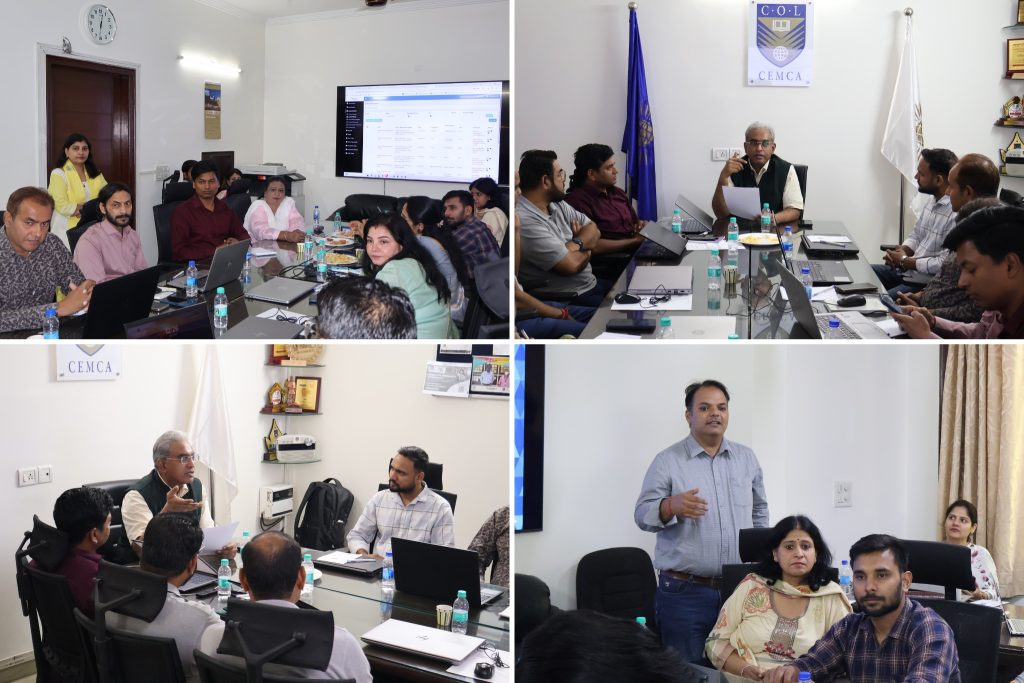
Empowering Community Radio Through Digital Innovation: CEMCA and Reliance Foundation Conduct Capacity-Building Programme for CRS
On 10 April 2026, a significant capacity-building programme for Community Radio Stations (CRS) was organised by Commonwealth of Learning-Commonwealth Educational Media Centre for Asia (COL-CEMCA) in collaboration with Reliance Foundation, at New Delhi, bringing together sector stakeholders to explore how digital innovation can strengthen the future of community radio in India. The programme served as a strategic platform to discuss practical, scalable, and inclusive technology solutions that can enhance the operations, outreach, and impact of community radio stations.
The session focused on how AI-enabled systems, digital content repositories, internet radio, listener feedback tools, learning platforms, and GIS-based planning can support CRS in addressing local community needs more effectively. Rather than presenting technology as a generic solution, the programme emphasised that each community radio station has its own unique identity, audience, geography, language, and thematic priorities. Accordingly, the proposed digital systems were introduced as customisable and demand-responsive solutions designed to align with real ground-level workflows.
During the programme, Reliance Foundation demonstrated a structured Content Management Repository that can help radio stations digitally organise and archive audio, video, images, scripts, and metadata in a searchable format. This is expected to support easier retrieval, long-term preservation, and more efficient reuse of valuable community content.
Another major highlight was the demonstration of an Internet Radio platform that would enable CRS to expand their reach beyond terrestrial broadcasting limitations. Stations would be able to host online radio channels and podcasts, allowing listeners to access programmes anytime and from anywhere. Participants appreciated the potential of this platform to increase audience engagement and continuity of access.
The session also addressed the use of publicly available advisory content from Reliance Foundation’s digital platforms, including YouTube channels. It was clarified that relevant content could be shared with CRS in curated audio formats based on each station’s location, audience profile, and thematic focus, ensuring that the right information reaches the right communities.
To strengthen listener engagement and evidence-based programming, innovative feedback systems were also showcased. These included IVRS-based voice feedback tools for low-connectivity areas and easy-to-use digital survey forms that can be shared through mobile channels such as WhatsApp. Such tools can help stations capture community voices, listener responses, and programme impact more systematically.
A forward-looking component of the programme was the GIS mapping proposal, under which community radio stations can be geo-tagged and connected with nearby public facilities such as health centres, schools, blood banks, and emergency services. This can significantly enhance the role of CRS during disaster response, health awareness campaigns, and community service delivery.
The programme further introduced a Learning Management System (LMS) through which step-by-step training modules, videos, quizzes, and certification courses can be developed for CRS staff, volunteers, and future users. This initiative can create a sustainable ecosystem for continuous learning and digital capacity building across the sector.
In his address, Dr. B. Shadrach, Director COL-CEMCA, highlighted the growing influence of Artificial Intelligence (AI) in the radio sector, noting that while global examples demonstrate its ability to automate content and optimise programming, excessive reliance on AI can distance radio from its core community focus. He emphasised that community radio must remain rooted in human engagement and local relevance, positioning AI as a supportive tool for tasks such as content aggregation, translation, and summarisation rather than a replacement for human decision-making. Stressing the need for a balanced, hybrid approach, he underscored the critical role of radio practitioners as gatekeepers who ensure accuracy, cultural appropriateness, and ethical dissemination of information. He also acknowledged the importance of institutional support from Reliance Foundation, including sustained capacity-building and access to knowledge resources, to help community radio stations effectively integrate AI while preserving their community-driven mandate.
The overall response from participants was highly positive, with representatives from various community radio stations welcoming the opportunity to access affordable, practical, and scalable tools to strengthen their operations. The partnership between COL-CEMCA and Reliance Foundation was recognised as a key enabler in this effort, supporting community radio stations in enhancing content storage, broadcasting, capacity building, feedback collection, and long-term sustainability, while fostering innovation and growth in a rapidly evolving technological landscape.